There’s a mental model most small business owners carry around that goes something like this: business hours are when business happens. The phone matters between 8 and 5. After that, it can wait until tomorrow.
It’s a reasonable assumption. It’s also wrong — or at least, it’s incomplete in a way that costs real money.
Research from Invoca and similar call-tracking platforms consistently shows that somewhere between 40% and 60% of missed calls to small businesses happen outside normal working hours. That number alone is worth paying attention to. But it’s not just the volume that matters. It’s the type of caller.
Why after-hours callers are different
Someone who calls a business at 10am on a Tuesday is often in planning mode. They’re getting quotes. Comparing options. Making a spreadsheet. They might call three companies, leave a message with each, and wait to see who gets back to them first. They’re shopping.
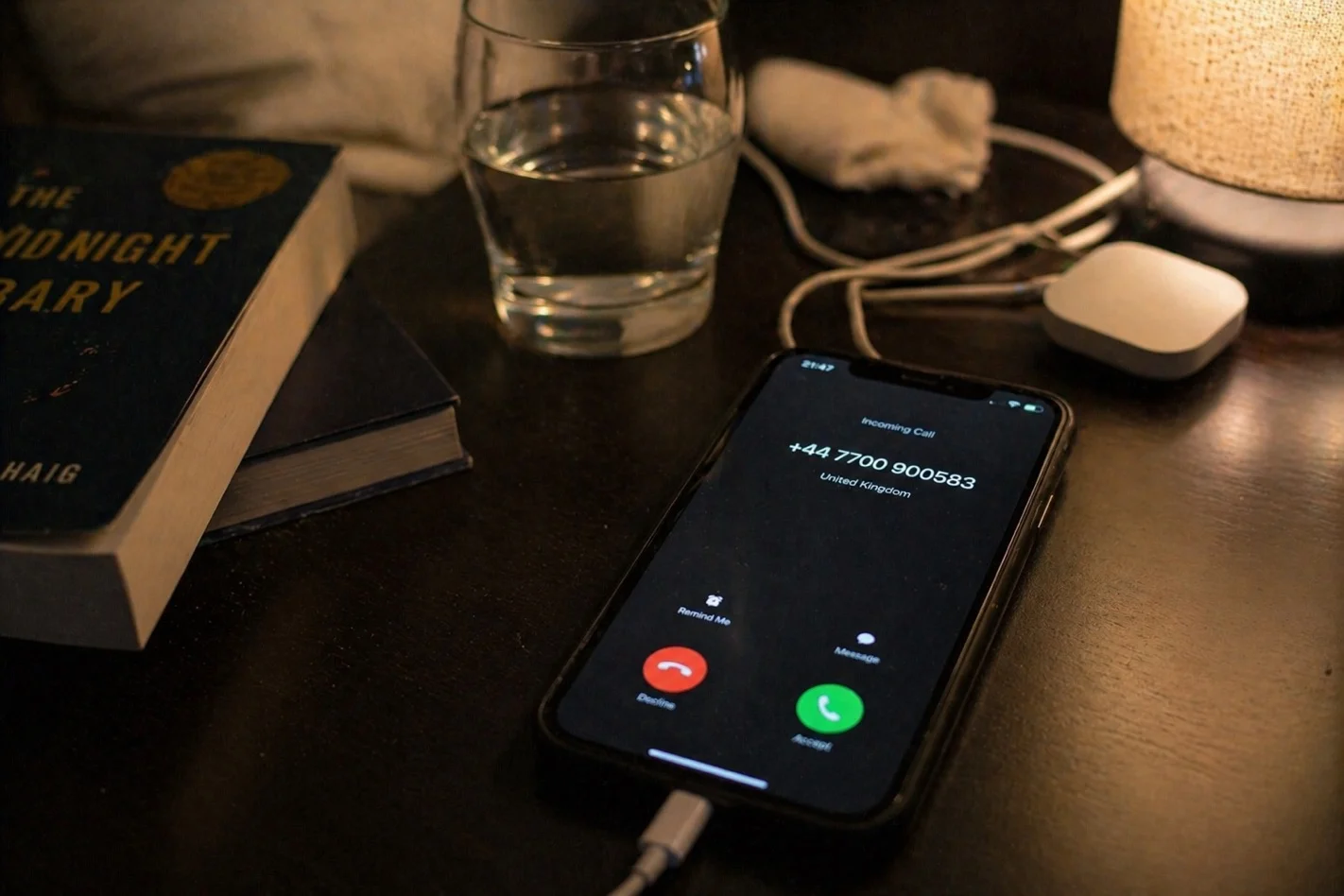
Someone who calls at 6:30pm is usually dealing with something. The boiler’s making a noise it shouldn’t. The kitchen tap won’t stop running. They’ve come home to find a leak under the sink. The dog’s knocked a fence panel out and now the garden is open to the road. They’ve locked themselves out.
These aren’t browsers. They’re buyers. And they have a shared trait: they want to speak to someone now. Not tomorrow. Not when you check your messages. Now.
The data backs this up. Call-tracking studies have found that after-hours callers convert at a higher rate than daytime callers for service businesses. The reason is simple — urgency compresses the decision window. A daytime caller might take three days to choose a plumber. An evening caller will book the first one who picks up.
The voicemail problem gets worse at night
We already know that very few people leave voicemails — less than 3%, according to most industry research. But after hours, that number drops even further. During the day, a caller might at least hear a professional greeting and think, “Fine, I’ll wait for a callback.” At night, voicemail feels like a dead end. It signals that the business is closed, that nobody’s going to deal with this until morning.
For someone with a burst pipe, that’s not good enough. They’re calling the next number on the list within seconds.
Brad, a mobile mechanic we spoke to, described it well: “People call me at the end of their working day because that’s when they’ve got time to sort out the car. But that’s also when I’ve knocked off. I used to think those were tomorrow’s jobs. Turns out they were nobody’s jobs — they’d have called a garage by the morning.”
The maths of the evening window
Take a small trade business that gets ten enquiry calls a week. If 40% of those — four calls — come after 5pm, and the business misses all four because they’ve finished for the day, that’s four potential jobs lost every week. Not every one of those would have converted, obviously. But if even two were genuine, and each was worth £150–£300, that’s £15,000–£30,000 a year in revenue that disappeared after hours.
Most business owners don’t do this maths because they never see the calls they miss. They see the jobs they do. The evening calls are invisible unless you’re tracking them.
What the evening window actually requires
Covering after-hours calls doesn’t mean working evenings. It means having something in place that handles the first contact — captures the caller’s details, understands the nature of the enquiry, sets an expectation for when they’ll hear back, and gives them enough confidence that they don’t immediately dial the next number.
That could be a call-handling service. It could be an automated system that asks the right questions and logs the answers. It could be a dedicated phone line with a clear, specific out-of-hours process. The format matters less than two things: the caller feels heard, and you have the information you need to follow up first thing.
Jess, who runs Shine & Sparkle cleaning, told us something that stuck: “I used to think the evening calls were just people who’d been meaning to ring all day and finally got around to it. Some of them are. But a lot of them are people who’ve just had a reason to call — a dinner party this weekend, in-laws coming to stay, something that just happened. Those people aren’t waiting until Monday.”
The shift nobody talks about
There’s a broader change happening underneath all of this. More people work non-traditional hours. More people deal with household admin in the evening because their daytime is spoken for. The 9-to-5 assumption was already shaky a decade ago. Now it barely holds at all.
For small businesses — especially trades, cleaning, home services — the customers have moved. They’re calling at 6pm, 7pm, 8pm. Some of them at weekends. The businesses that answer are the ones getting the work. The ones that don’t are wondering why their phone seems quieter than it should be.
It isn’t quieter. It’s just ringing at a time when nobody’s listening.