Brad, who runs a mobile mechanic business, told us about a missed call that sat on his phone for almost a week. It came in on a Tuesday afternoon while he was under a bonnet in someone’s driveway. He listened to the voicemail that evening — sounded like a decent job, a warning light on a Golf in a reasonable area. He meant to call back but it was getting late and he didn’t want to ring a stranger after eight. Wednesday morning he remembered, but he was already on the phone to a parts supplier. By Thursday he’d half-forgotten about it. By Friday it had crossed into that territory where calling back felt like it needed an apology first, and the apology made the whole thing harder, so he put it off again.
“I think they probably sorted it by Wednesday,” Brad said. “But I still felt bad about it the following week.”
We’ve heard versions of this from a lot of the business owners we’ve spoken to. The details change — plumber instead of mechanic, a bathroom refit instead of a warning light — but the pattern is the same. A call comes in during a job, gets noticed too late, and then decays through a specific sequence: good intentions on day one, mild guilt by day three, quiet acceptance by day five. The callback window closes not because someone made a decision, but because enough time passed that calling felt worse than not calling.
How long do you have before a lead goes cold?
There seems to be a period, somewhere in the first few hours after a missed call, where returning it is easy and natural. “Sorry I missed you earlier, how can I help?” requires no explanation. It’s just a normal phone call. After about a day, the same conversation starts with “Sorry, I’ve been meaning to get back to you” and now the business owner is on the back foot before the conversation has even started. The customer is polite about it, but they’ve also probably spoken to someone who picked up first time. Research from MIT and Harvard Business Review found that businesses responding to a new enquiry within five minutes are 100 times more likely to make contact than those who wait thirty minutes — and by the time most tradespeople return a call, hours have passed, not minutes.
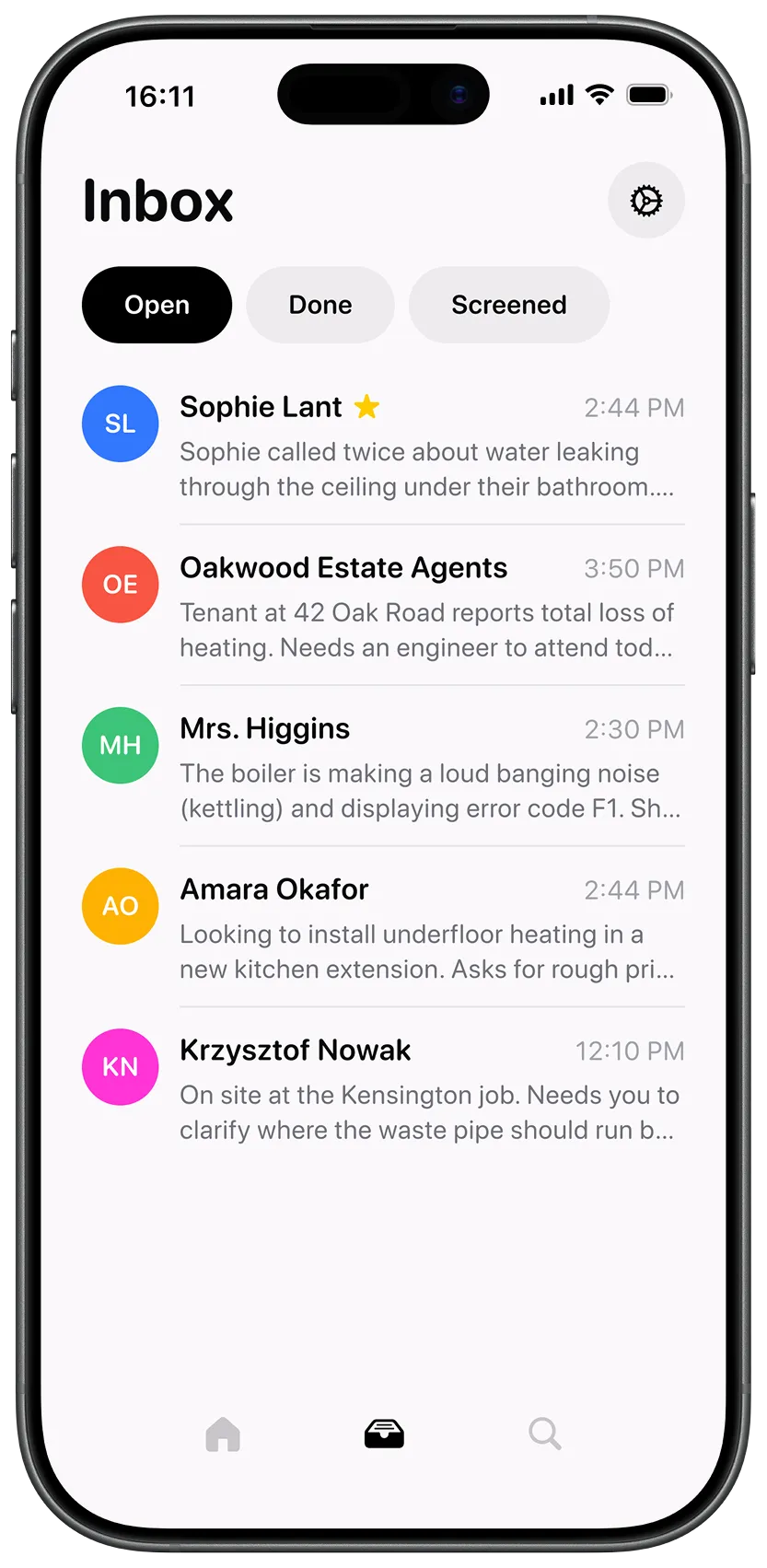
Mark, a plumber we also spoke to, described the end-of-day routine that most tradespeople will recognise: sitting in the van or at the kitchen table, working through voicemails, trying to piece together who called about what. “You’d listen to the message, try to understand what the problem was, then call them back and hope they still needed a plumber. Sometimes they did. Sometimes they’d already sorted it.”
The ones who’d already sorted it are the invisible cost. They don’t show up anywhere in the accounts. There’s no line item for “jobs I would have got if I’d called back two hours earlier.”
How many leads disappear before you even know about them?
Invoca’s research puts the missed call rate for small businesses at about a quarter. Of those missed calls, almost nobody leaves a voicemail — the figure is less than 3%. Most callers just hang up and try someone else.
Which means the callbacks that Brad and Mark agonise over, the ones where someone at least left a message, are only a fraction of the problem. The bigger issue is the calls they never knew about: people who rang, got no answer, and moved on without leaving a trace. Those leads don’t even make it to the guilt stage. They just vanish.
What actually fixes the callback problem?
Most tradespeople who struggle with this already know they should call people back faster. They’ve told themselves that plenty of times. Knowing it doesn’t help because the problem isn’t discipline, it’s that the working day is structured in a way that makes callbacks hard.
When someone is doing physical work that requires concentration — diagnosing a fault, replacing a part, dealing with a customer — there’s a narrow window between jobs where admin has to happen. In that window, returning a call competes with checking the next address, updating the customer just finished, grabbing food, and whatever else has piled up. The callback is important but it’s not urgent in the way the next job is, so it slides.
The people who handle callbacks well tend to have a system rather than better intentions. Some have a strict end-of-day rule. Others use something that captures the enquiry details automatically so the reconstruction work is already done by the time they follow up. The method varies. The principle doesn’t: the callback has to live somewhere more reliable than memory.
The person who called Brad on that Tuesday almost certainly found a mechanic by Wednesday. But next Tuesday there’ll be another call, and whether it goes the same way depends on whether anything has changed between now and then.