Moving house is one of the most stressful things a person does. By the time someone calls a removals company, they’ve usually accepted an offer on their house, they’re coordinating with solicitors, and they’re starting to confront the reality of packing up a decade’s worth of stuff. The call to book a removal van is one item on a very long list, and it often comes at a point where the person’s patience for admin is at its thinnest.
How that first call goes shapes the entire relationship. And in removals, it’s a harder call to handle well than in almost any other trade.
The fifteen-minute problem
When a plumber gets a phone enquiry, the conversation takes about three minutes. What’s the problem, where are you, can you describe what’s happening. Quick, focused, done.
Removals enquiries take fifteen minutes at minimum. Where are you moving from, where are you moving to, how many bedrooms, is there a loft full of stuff, any large or awkward items (piano, hot tub, gun safe — all of which come up more often than you’d think), are there stairs at both ends, is there parking for a van, what date, what’s the access like. The caller often doesn’t know the answers to half of these questions off the top of their head, which adds more time.
A removals company owner we spoke to did the maths on his phone time. He was averaging about twelve serious enquiries per week, each taking ten to twenty minutes. That’s two to four hours a week spent on the phone with potential customers, on top of actually doing removals. “I was basically doing a part-time admin job on top of a full-time physical job,” he said.
The quoting trap
Removals enquiries almost always end with the same question: how much will it cost? The caller wants a number. The company wants to give an accurate one. These two things are in tension because removal costs depend on variables that can only be properly assessed with a survey — and offering a rough price over the phone creates problems either way.
Quote too low and the customer books, then gets a higher price after the survey. That feels like a bait-and-switch, even if it was genuinely just an estimate. Quote too high and the customer goes to a competitor who was more optimistic on the phone. Either way, the phone quote anchors the expectation in a way that’s hard to undo later.
The businesses that handle this well tend to separate the enquiry capture from the quotation. Capture the details, book a survey, give the quote once you’ve seen the job. But that only works if the initial enquiry is handled efficiently enough that the caller doesn’t drop off before you get to the survey stage.
Where the money goes
The financial impact of phone problems in removals is bigger than in most trades because of the average job value. Invoca’s analysis of home services businesses found that 41% of calls go unanswered at weekends — the very time when people dealing with a house move are most likely to be calling around. A local move might be £400-800. A long-distance move can be £1,500-3,000 or more. Losing even two leads per month to missed or poorly handled calls could mean £20,000-48,000 in annual revenue walking out the door.
And the competition is intense. Most customers call two or three removal companies. The one that responds fastest, asks the right questions, and makes the process feel managed is the one that gets the booking. The standard missed call dynamics apply with particular force here because the customer is already stressed and looking for any signal that this company will make the process easier rather than harder.
Separating the enquiry from the person
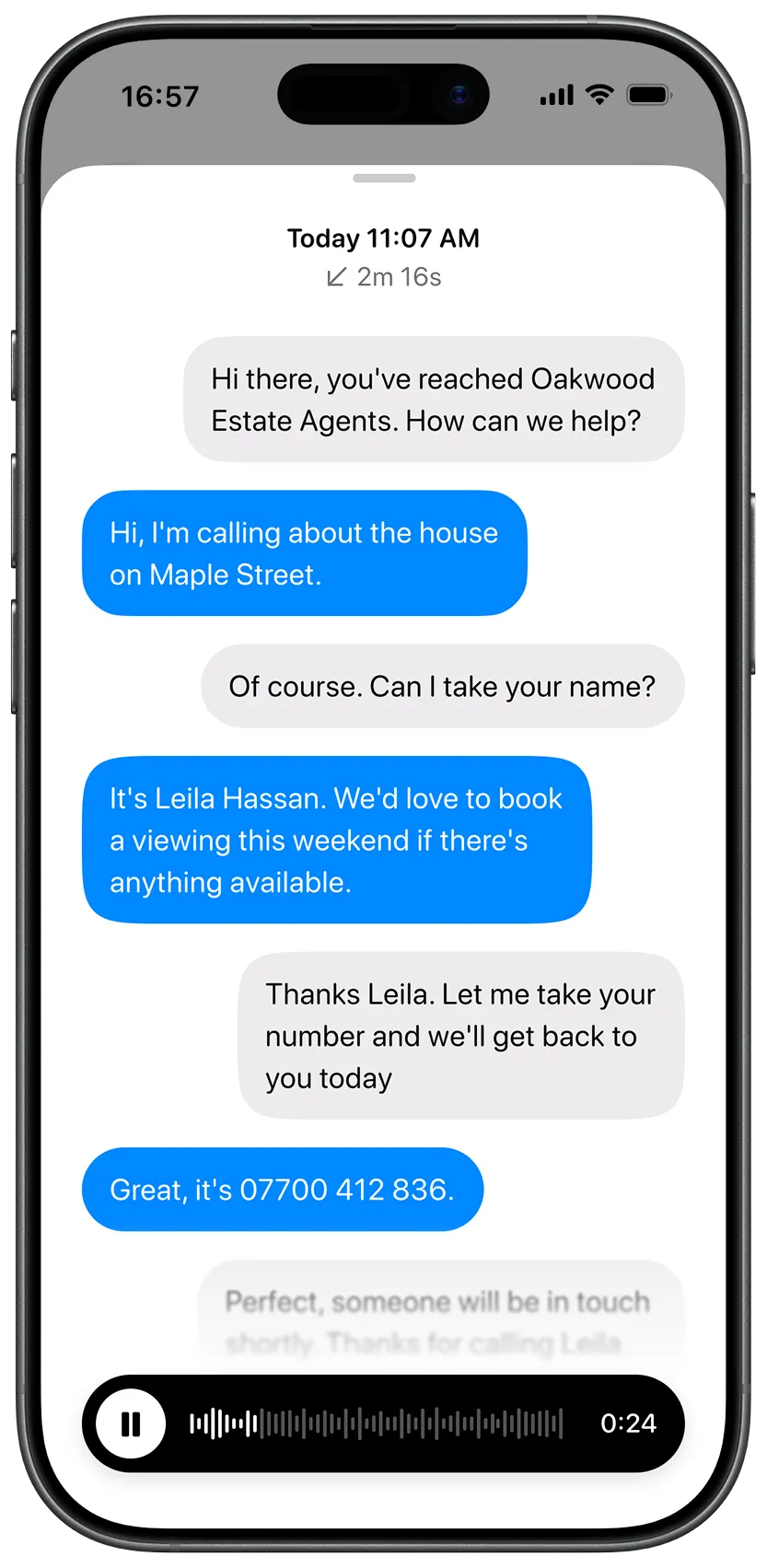
The removals companies that seem to have the best conversion rates have found ways to separate the initial enquiry capture from the owner’s personal availability. Some have an office person. Some use an AI receptionist configured with the specific questions relevant to removals — origin, destination, property size, date, access, special items. The details get captured whether the owner is available or not, and the follow-up call can focus on booking the survey rather than starting the whole conversation from scratch.
The phone will always be the hardest part of running a removals company, because the service is complex and the customer is stressed. But the question of who or what handles that first interaction — and whether it happens at all when the owner is out on a job — determines a surprising amount of the business’s revenue.