There’s a version of a service business that looks successful from the outside — full diary, good reviews, work coming in — but hasn’t actually changed in five years. The owner is doing roughly the same jobs for roughly the same prices, working roughly the same hours. They’re busy. They’re not building.
The distinction matters, and it came up in nearly every conversation we had while putting together material for this blog. We’d ask a business owner how things were going, and the answer was almost always “busy.” But when we asked what was different from a year ago, the answer was often “not much.”
Full diary, empty pipeline
Mark, a plumber we’ve spoken to several times, described a period where he was completely booked out for three weeks. From the outside, business was booming. In practice, he was so focused on getting through the jobs in front of him that he stopped answering new enquiries properly. Calls went to voicemail. Voicemails went unreturned for days. By the time the three-week rush ended, his forward diary was almost empty.
“I’d been so busy I forgot to keep the next month fed,” he said.
This is the feast-and-famine cycle that dominates a lot of trade businesses, and it’s not caused by a lack of demand. It’s caused by the owner being the bottleneck for everything: doing the work, answering the phone, quoting jobs, chasing payments, ordering materials. When the work is flowing, everything else gets squeezed, and the pipeline that feeds future work is usually the first casualty.
The busiest days in a service business are often the ones that do the most damage to its future, precisely because they feel like the least problematic.
What building looks like
Building doesn’t necessarily mean hiring staff or opening new offices. For a lot of small service businesses, it means putting systems in place that let the business function when the owner is busy doing the actual work.
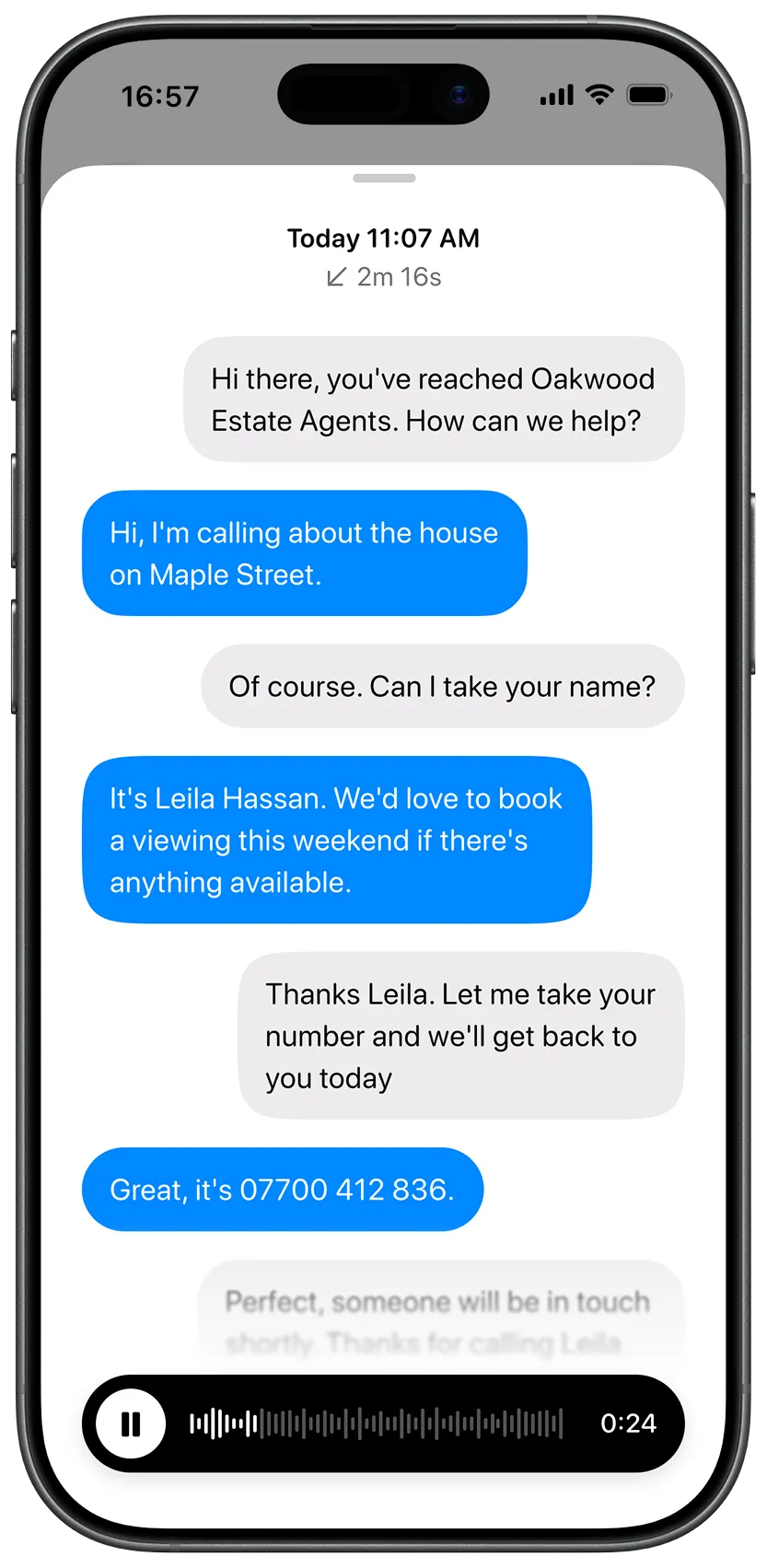
That could be something as simple as a booking system that lets clients confirm without a phone call. Or a way of handling inbound enquiries that doesn’t depend on the owner being available to pick up. Or a pricing structure that’s clear enough to share without a conversation every time.
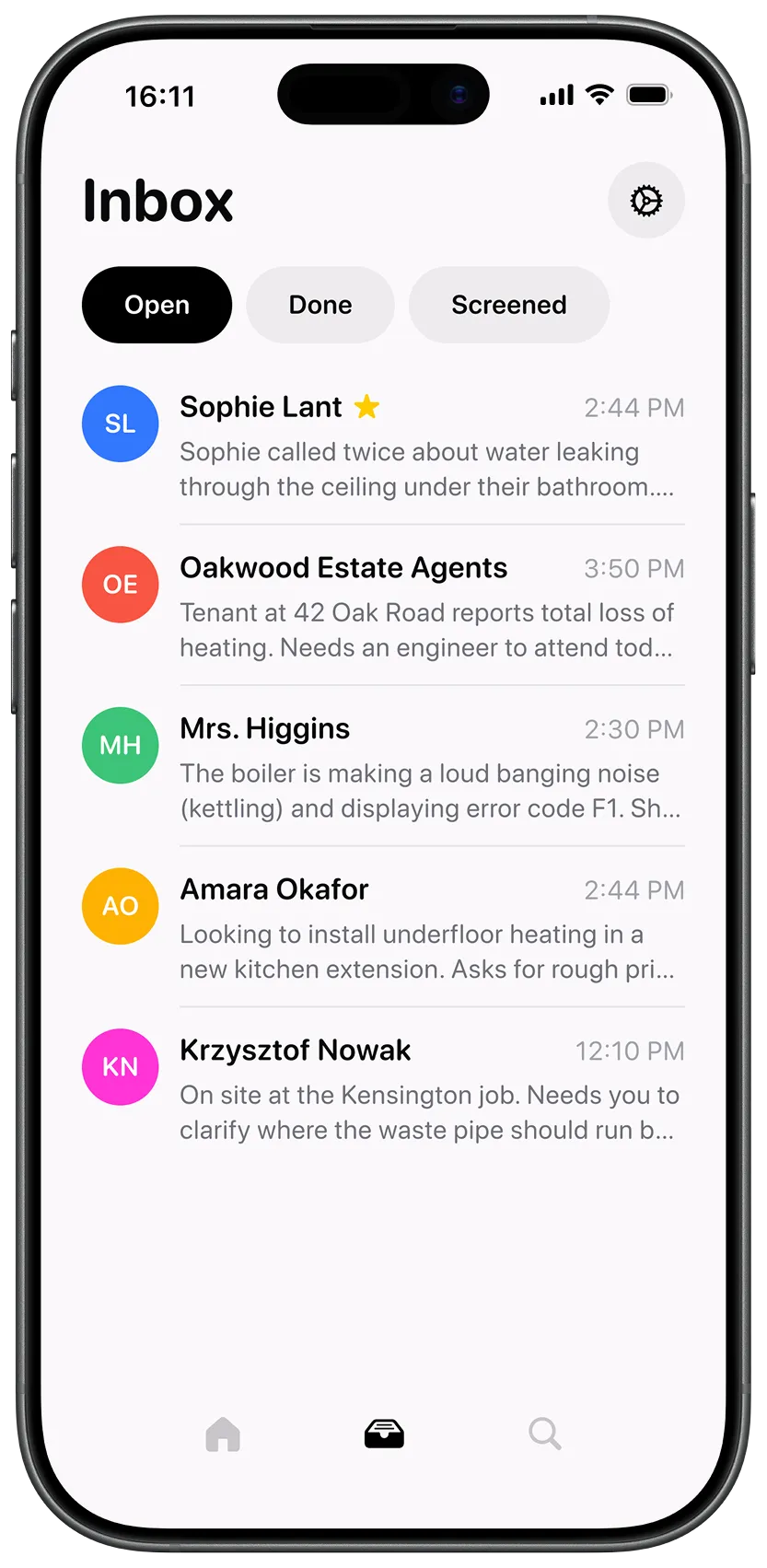
Jess, who runs a cleaning company called Shine & Sparkle, talked about the moment she started thinking about her business differently. “I wanted people to get a helpful response straight away,” she told us. “But I also realised I was spending a lot of time repeating the same information.” Her solution was to set up a system that handled the initial enquiry conversation, asked the right questions, and gave callers a rough price — so by the time she followed up, the admin was already done and the conversation could move forward.
The point isn’t what tool she used. The point is that she stopped treating every new enquiry as something only she could handle. That shift, from doing everything yourself to building processes that work without you, is the difference between being busy and building something.
The test
A useful question, borrowed from a business owner we met at a trade show, is: “If I took two weeks off, would my business still be getting new enquiries when I came back?”
For a lot of sole traders, the honest answer is no. The phone would go unanswered, the enquiries would go elsewhere, and they’d come back to a dead diary. That’s a busy business. It’s not a resilient one.
Building looks like making changes, often small and undramatic, so that the answer to that question starts to shift. Not everyone wants to grow into a big operation. But most people who went self-employed did it with some idea of what they wanted the business to become, and “exactly the same as last year, but more tired” probably wasn’t it.