There’s a pattern that shows up in service businesses so reliably it almost qualifies as a rule. The owner is overwhelmed with work. They’re doing long days, keeping clients happy, turning jobs around. The business feels successful. Then, a month or two later, there’s a gap in the diary that shouldn’t be there.
The explanation, when they look back, is usually the same. During the busy period, they stopped picking up the phone properly. Enquiries went to voicemail. Callbacks got delayed by a day, then two, then forgotten entirely. The pipeline that feeds future work emptied out while they were heads-down delivering the work they already had.
What does a busy week cost your future pipeline?
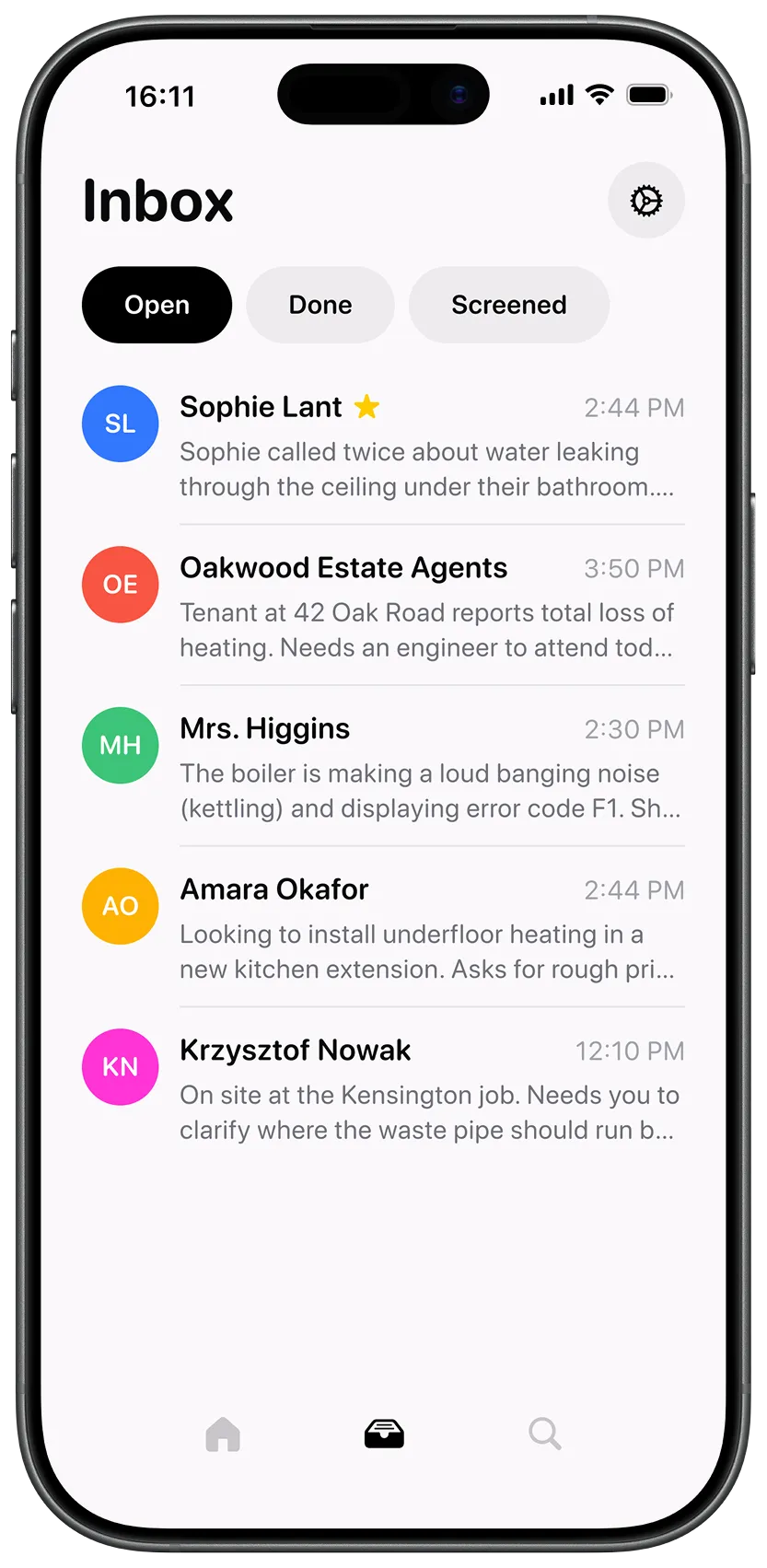
Brad, a mobile mechanic we spoke to, described this clearly. When he’s flat out — driving between jobs, working on cars all day — his phone goes dark for hours at a time. “You’d finish a job, check your phone and see a handful of missed calls. Then you’re trying to remember who said what and which job is worth calling back.”
The problem isn’t any single missed call. It’s what happens over a busy week. If Brad misses three calls a day for five days, that’s fifteen enquiries that went unanswered. Invoca’s data suggests fewer than 3% of those callers will leave a voicemail. The rest just try somebody else. By the time the busy spell ends and Brad has capacity again, the people who would have filled his diary next month have already booked other mechanics.
He lost those jobs to mechanics who answered the phone. Not better mechanics, or cheaper ones. Available ones.
Why don’t tradespeople notice the damage until later?
The problem is invisible while it’s happening. When the diary is full, there’s no alarm saying “you missed four leads today.” The work in front of you is concrete. The work you’re losing is silent.
Mark, a plumber, put it well. He described a three-week period where he was completely booked out and felt on top of things. But he’d let the phone go to voicemail for days at a time. When the rush ended, his forward diary was nearly empty. The month that followed was one of his quietest.
“The irony is that the weeks I felt most on top of things were the weeks I was actually losing the most work,” he said.
What does the maths actually look like?
Most tradespeople haven’t done this calculation, because the inputs are invisible.
Say someone misses two genuine enquiries per busy day. Not tyre-kickers or spam — actual potential jobs. If each of those jobs is worth a couple of hundred pounds, that’s several hundred per day in work that went to someone else. Over a busy fortnight, the total gets surprisingly large.
None of it shows up in anyone’s accounts. There’s no line for “revenue lost because I was too busy to answer the phone.” It’s invisible, which is what makes it dangerous. You can’t fix a problem you can’t see.
How do you stay busy without hurting future growth?
The business owners we’ve spoken to who’ve escaped this pattern did so by finding a way to keep winning new work even when they couldn’t answer the phone themselves. The specific method varies. Some hired a part-time admin person. Some use an AI receptionist that captures enquiry details automatically. Some are very disciplined about returning every call within an hour, regardless of what they’re doing.
The method matters less than the recognition that busy days aren’t just productive days. They’re also the most expensive ones, in ways that don’t show up until a quiet month arrives and nobody can explain why.